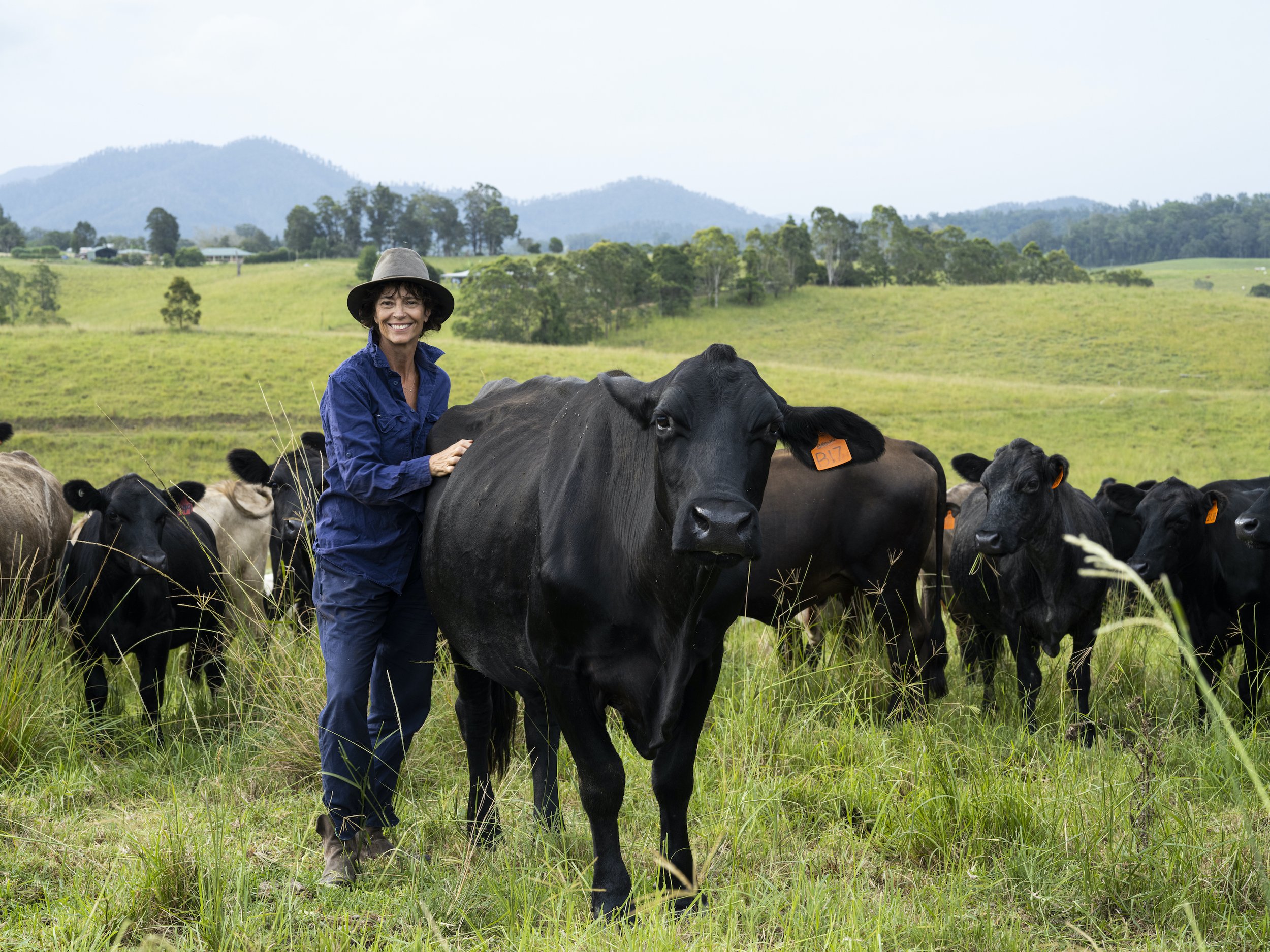
Regeneratively farmed beef from a small family farm in NSW.
Join the regenerative farming movement by supporting your local farmers who prioritise soil health and grass-fed, free roaming, animals.
We respectfully acknowledge the traditional custodians of this land, the Gumbaynggirr people.
BETTER FOR EARTH.
BETTER FOR COWS.
BETTER FOR YOU!
OUR FARM
As a regenerative farm, our practices restore degraded soil, capture carbon and boost biodiversity. As caring farmers, we raise our cattle with love and the highest welfare practices.
We are a small scale family farm nesstled amongst the coastal hillsides of New South Wales’ Mid North Coast. Our 120 head of cattle roam happily across 750 acres. That’s 6 acres per cow!
OUR PRACTICES
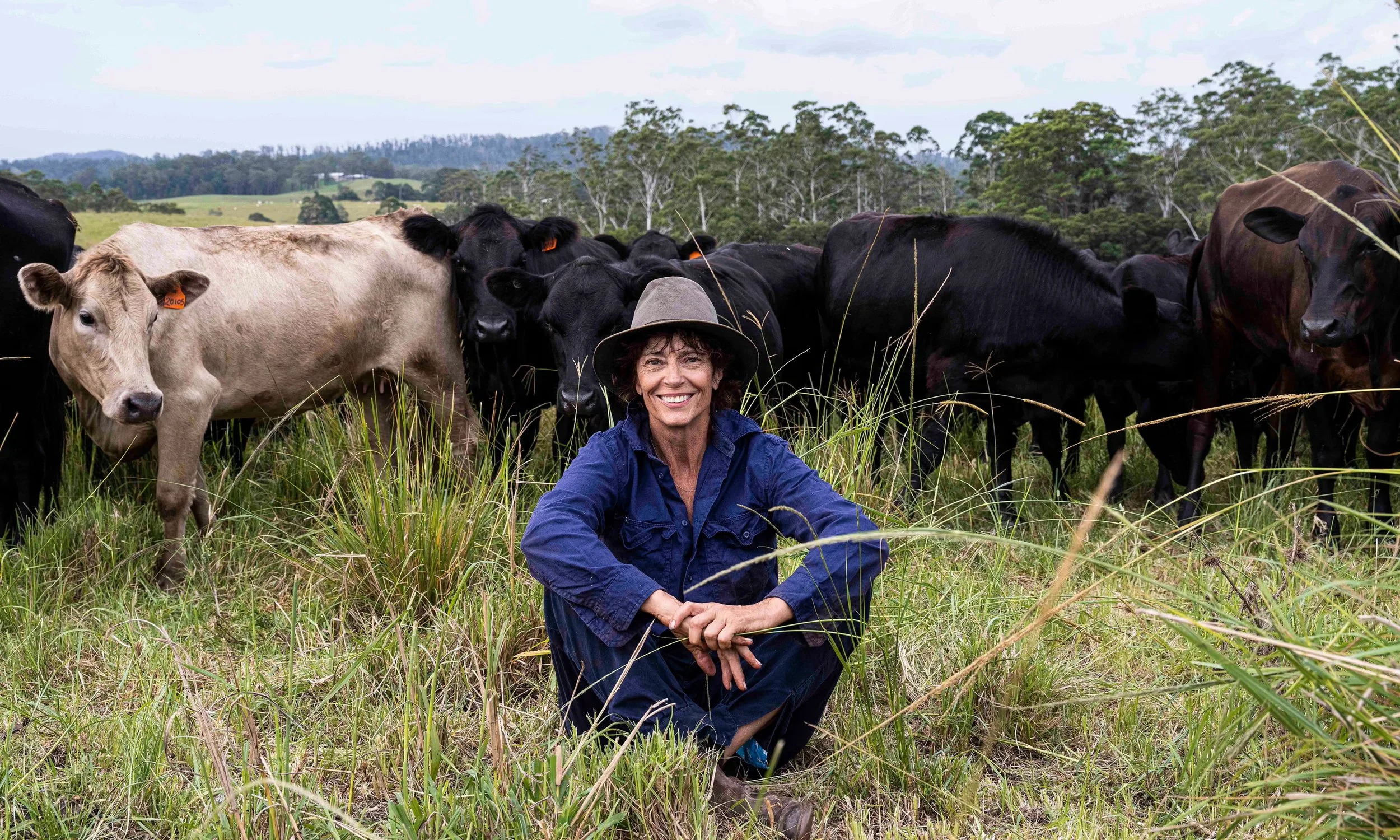
We practice rotational grazing, meaning we move our herds through smaller paddocks every couple of days, mimicking their natural nomadic grazing patterns. This prevents compaction and overgrazing, distributes their natural fiertiliser, tramples organic matter into soil, encourages even eating and importantly, among other benefits, gives the the land time to recover.
The now uncompated, microbe filled soil can soak up and hold rainwater, allowing plant life to grow deeper roots and pull more carbon from the atmosphere.
As Regen Farmers, we also highly regulate any use of a chemical as a last resort and use absolutely no synthetic fertilisers.
OUR CATTLE
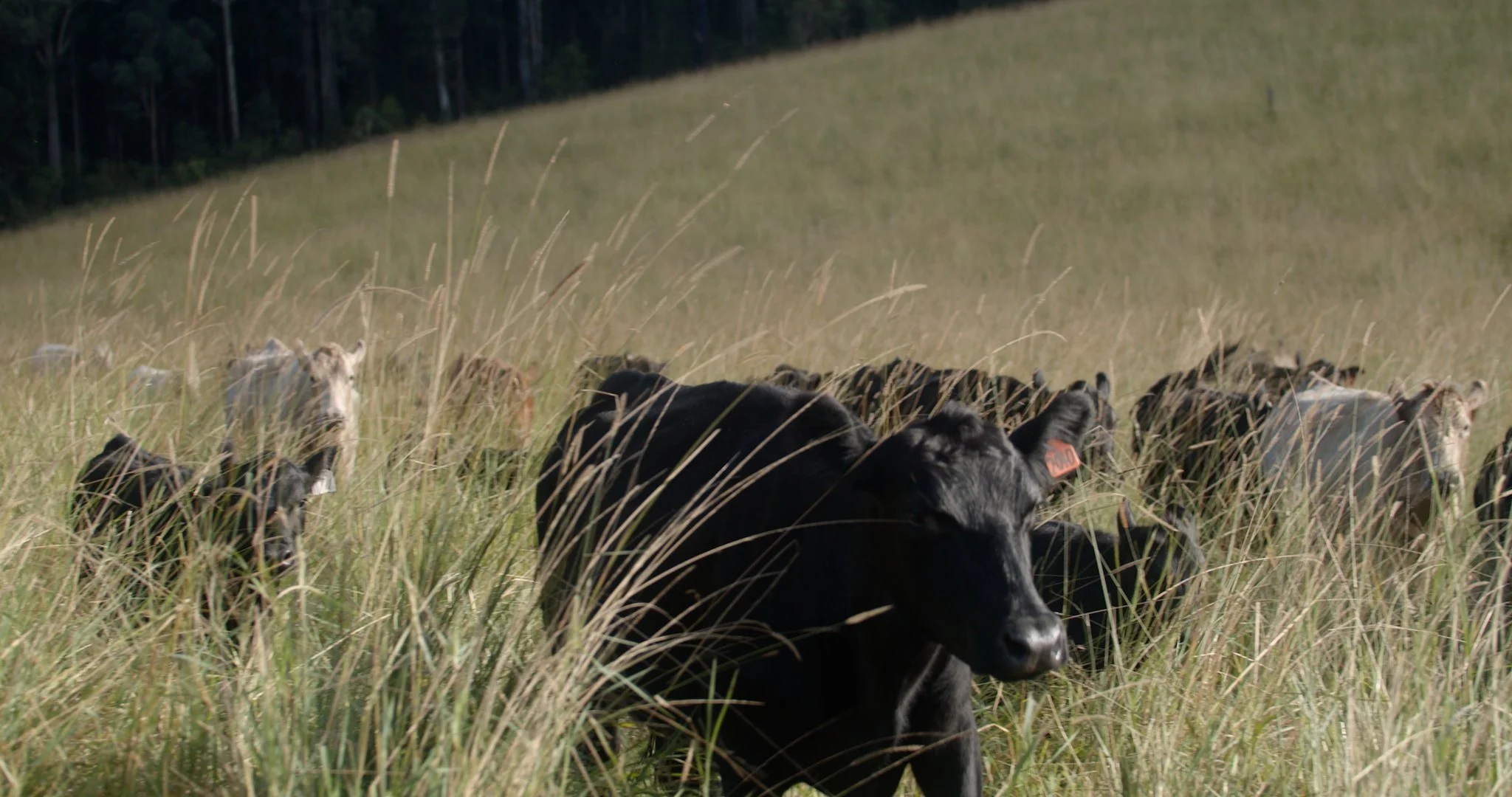
The beef that you buy from us is born and raised on our land. They live with their mums for 6 months, then grow and live in their own herd for another 1-1.5 years. After a very happy and natural life, we send them directly to our closest abbetoir. From there, they go to a great local butcher to be processed, snap frozen and boxed.
You can pick up your box the next day. Does it get any fresher or healthier!? This is how it is meant to be done.
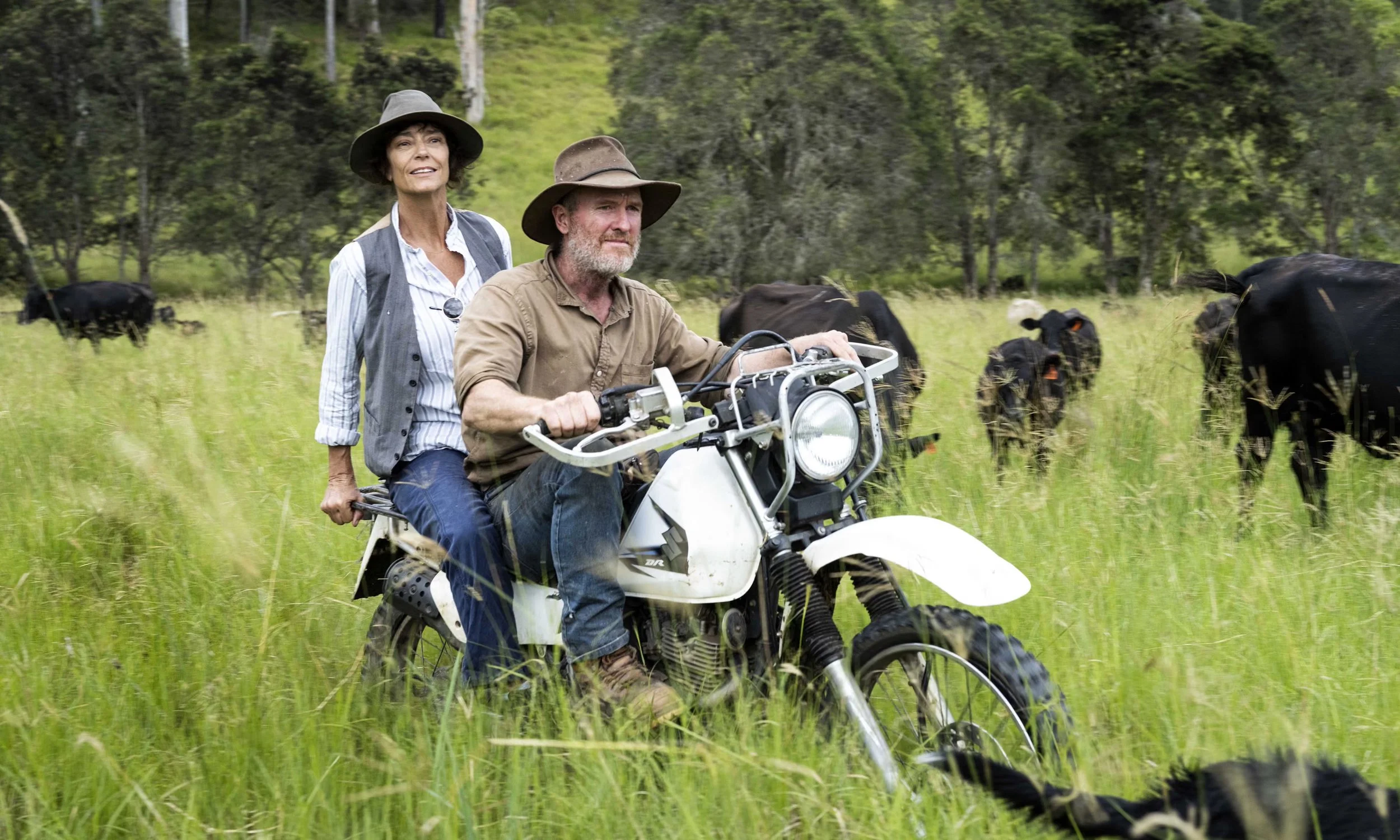
Rachel’s Farm, The Documentary.
Film director and actress Rachel Ward is not the first person you’d expect to join a farming revolution. In this triumphant film, Rachel voyages from wilful ignorance about the ecological impacts of conventional agriculture on her own rural property, to embracing a movement to restore the health of Australia’s farmland, food and climate.